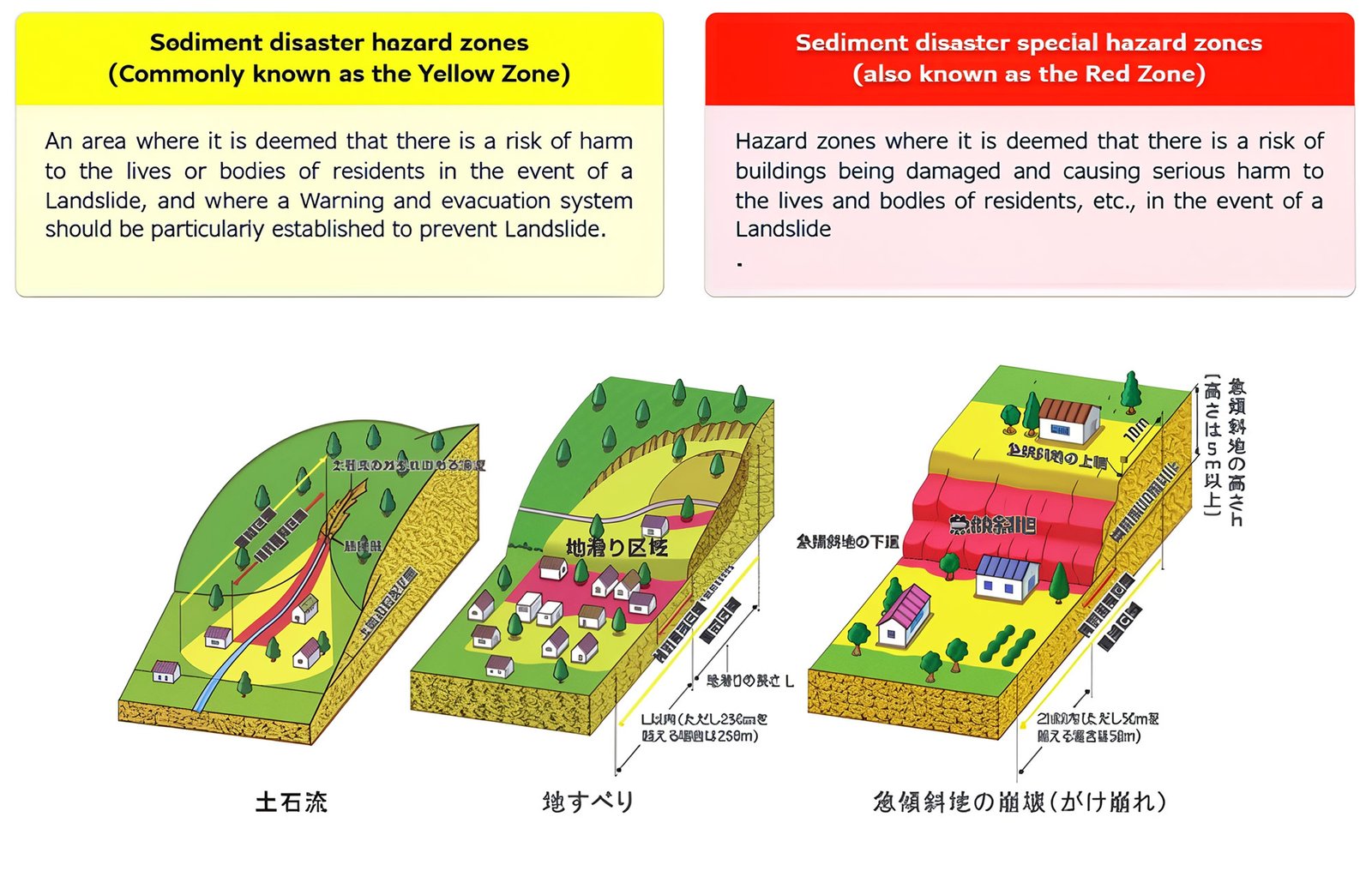
Yellow & Red Zones
Understanding Yellow and Red Zones in Japan

In Japan, a “yellow zone” primarily refers to a Sediment Disaster Warning Area, an area designated as having a risk of physical injury or loss of life from landslides and other sediment-related disasters. In these yellow zones, warning and evacuation systems are established to inform and protect residents.
Here’s a breakdown of what a yellow zone entails:
- Designation:
These zones are defined under the Sediment-Related Disaster Prevention Act.
- Risk Level:
They indicate a risk of physical harm to residents due to sediment disasters like landslides, steep slope failures, or debris flows.
- Protective Measures:
The government’s response in yellow zones includes:
- Early warning systems:To alert residents of impending danger.
- Information dissemination:Raising awareness among the local population about sediment-related disaster risks.
- Hazard maps: Visual representations of hazard areas are used to guide residents.
Contrast with Red Zones:
A more serious designation is the Sediment Disaster Special Hazard Area, or “red zone,” which signifies a high risk of buildings being damaged and residents being seriously harmed by sediment disasters. Land development and certain types of buildings are restricted in red zones.